Personalised Physiotherapy Care for Long-Term Relief
Back pain is one of the most common health concerns affecting people of different age groups. Whether you spend long hours sitting at an office desk, perform physically demanding work, drive for extended periods, or experience age-related changes, back pain can interfere with your everyday activities. Finding the right back pain treatment in Madurai is important to reduce discomfort, improve mobility, and regain confidence in your daily routine.
At Care to Cure Clinic, Madurai, physiotherapy and personalised rehabilitation approaches are designed to support individuals experiencing back pain, muscle stiffness, movement difficulties, and other musculoskeletal concerns. The right treatment approach depends on the underlying cause, symptoms, physical condition, and recovery goals of each individual.
Back pain should not always be treated with temporary pain relief methods. Understanding why the pain occurs and identifying suitable treatment options can help improve physical function and reduce the possibility of recurring discomfort. With appropriate assessment, guided exercises, lifestyle modifications, and professional support, many people can manage back pain without requiring surgery.
If you are searching for reliable back pain treatment in Madurai, understanding the causes, warning signs, treatment options, and preventive measures can help you make informed decisions about your health.
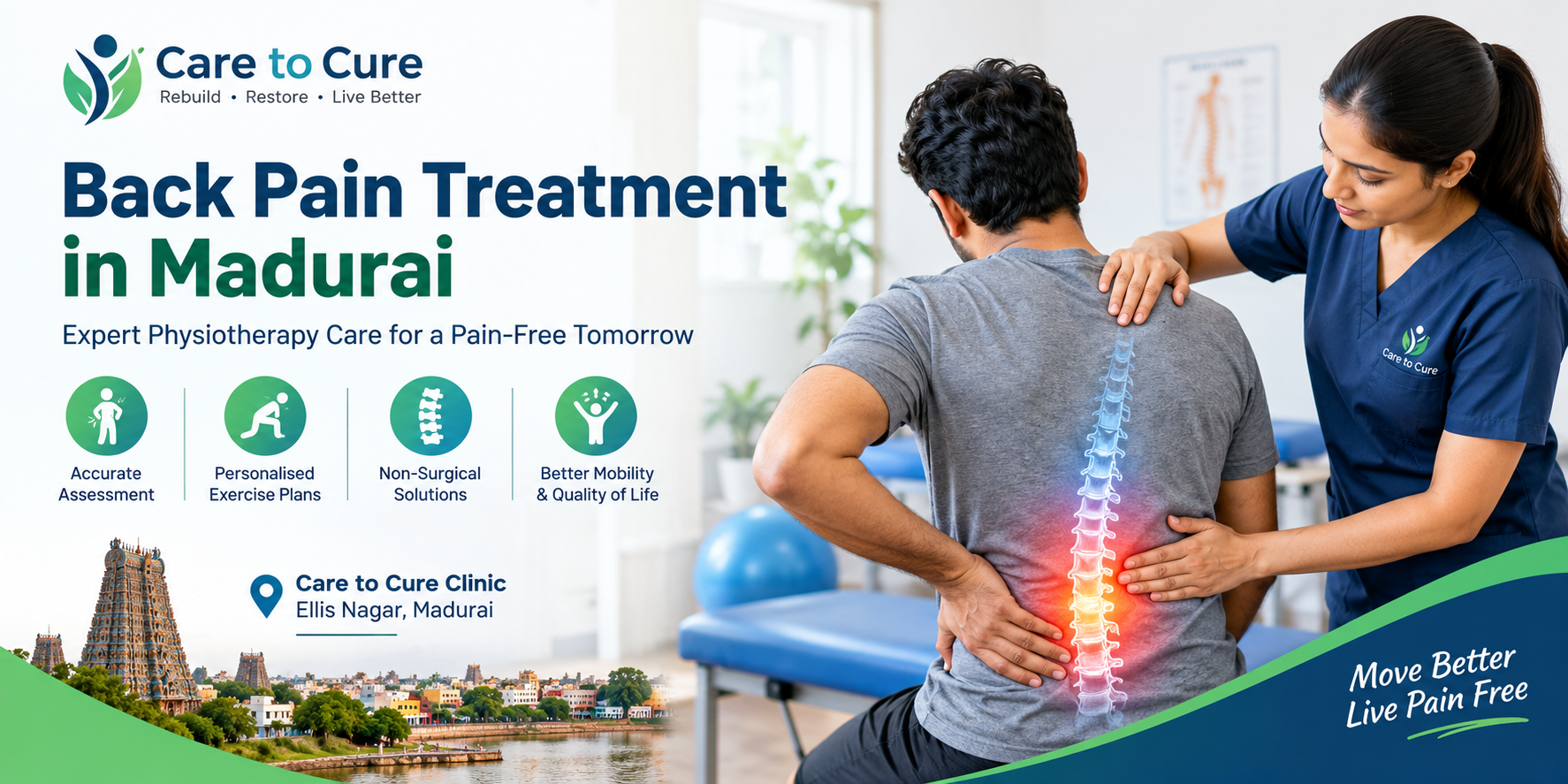
What Is Back Pain and Why Should You Treat It Early?
Back pain refers to discomfort, soreness, stiffness, or pain affecting any part of the back, including the upper back, middle back, and lower back. It may develop suddenly after lifting a heavy object or gradually because of poor posture, muscle weakness, repetitive movements, or underlying spinal conditions.
Some individuals experience mild discomfort that disappears within a few days, while others develop persistent pain that affects walking, sitting, sleeping, and working.
The lower back, also known as the lumbar region, is particularly vulnerable because it supports much of the body’s weight and participates in everyday movements such as bending, lifting, standing, and walking.
Ignoring recurring back pain may affect your ability to perform routine activities. Early evaluation can help identify contributing factors and determine whether physiotherapy, medical treatment, or specialist assessment is necessary.
Common Areas Affected by Back Pain
Upper Back Pain: Discomfort around the shoulder blades and upper spine, sometimes associated with muscle tension and prolonged sitting.
Middle Back Pain: Pain around the thoracic spine, which may occur because of muscular strain, posture-related problems, or other conditions.
Lower Back Pain: Discomfort around the lumbar region, commonly associated with muscle strain, joint problems, or disc-related conditions.
Tailbone Pain: Pain around the bottom of the spine, sometimes associated with prolonged sitting, falls, or injuries.
Radiating Back Pain: Pain that travels from the lower back into the buttocks or legs, which may be associated with nerve irritation.
Common Causes of Back Pain in Adults
Back pain can develop because of several factors. Some causes are related to muscles and daily habits, while others involve spinal structures, joints, nerves, or medical conditions.
Understanding these causes helps healthcare professionals develop an appropriate treatment plan.
1. Poor Sitting and Standing Posture
Maintaining an uncomfortable sitting or standing position for extended periods can increase stress on the back muscles and surrounding structures.
Office employees, computer professionals, students, and people working from home may experience back discomfort because of prolonged sitting, inadequate workstation arrangements, or limited physical activity.
Keeping your screen at a comfortable height, supporting your lower back, and taking regular movement breaks can help reduce unnecessary strain.
2. Muscle Strain and Ligament Injuries
Sudden lifting, repetitive bending, twisting, and excessive physical activity can strain the muscles and ligaments supporting the spine.
Symptoms may include:
Localised back pain.
Muscle tightness.
Difficulty bending forward.
Discomfort while standing or walking.
Pain during certain movements.
Appropriate assessment and gradual rehabilitation can help restore normal movement.
3. Herniated or Slipped Disc
The spinal discs act as cushions between the vertebrae. A herniated disc occurs when part of the disc’s inner material pushes through its outer layer.
Depending on its location and whether nearby nerves are affected, it may cause lower back pain, numbness, tingling, or pain extending into the legs.
Not every disc bulge or herniation produces symptoms. Treatment should be based on clinical findings rather than an MRI report alone.
4. Sciatica and Nerve Compression
Sciatica describes pain associated with irritation or compression of the sciatic nerve or its nerve roots.
It commonly causes pain that travels from the lower back through the buttock and down one leg. Some people also experience tingling, numbness, or weakness.
An appropriate clinical assessment helps determine whether the symptoms are related to nerve involvement and whether specialist medical evaluation is needed.
5. Weak Core Muscles
The abdominal, pelvic, and back muscles work together to support the spine and maintain movement control.
Reduced muscular strength or endurance may affect the body’s ability to manage everyday physical demands.
A suitable strengthening programme can improve functional capacity and movement control.
6. Age-Related Spinal Changes
As people grow older, the spinal joints, discs, and surrounding tissues undergo natural changes.
Conditions such as spinal osteoarthritis and degenerative disc disease may contribute to stiffness and back discomfort.
Age-related changes on imaging do not automatically mean that a person will experience pain. Treatment should consider symptoms, physical examination findings, and daily functional limitations.
7. Lack of Physical Activity
A sedentary lifestyle may contribute to reduced muscular endurance, flexibility, and general physical fitness.
Spending most of the day sitting without regular movement can make everyday activities more physically demanding.
Walking, appropriate exercise, and guided rehabilitation can help improve overall physical function.
Symptoms That Indicate You May Need Back Pain Treatment
Back pain symptoms differ depending on the underlying condition. Recognising these symptoms can help you decide when to seek professional evaluation.
Common symptoms include:
Persistent pain in the upper, middle, or lower back.
Stiffness after waking up in the morning.
Discomfort after sitting for long periods.
Pain while bending, lifting, or twisting.
Difficulty standing for extended periods.
Muscle tightness around the waist and spine.
Pain spreading towards the buttocks or legs.
Tingling or numbness in the lower limbs.
Reduced flexibility and movement.
Difficulty sleeping because of back discomfort.
If you experience recurring symptoms, professional assessment can help determine the appropriate back pain treatment in Madurai.
When Should You Seek Immediate Medical Attention?
Most back pain is not caused by a serious medical condition. However, certain symptoms require urgent medical assessment.
Seek emergency care if back pain is accompanied by:
New difficulty passing urine or loss of bladder control.
Loss of bowel control.
Numbness around the genitals, buttocks, or anus.
New or worsening weakness in both legs.
Severe symptoms following a significant accident or injury.
These symptoms may indicate serious nerve compression or another urgent condition.
You should also arrange prompt medical evaluation if you have fever, unexplained weight loss, a history of cancer, significant night pain, or rapidly worsening symptoms.
Do not delay medical attention to try home exercises when warning signs are present.
Back Pain Treatment in Madurai – Understanding the Available Treatment Options
Choosing the right treatment requires understanding the cause of the pain, its duration, severity, and impact on daily activities.
There is no single treatment suitable for every individual. A healthcare professional may recommend physiotherapy, exercise-based rehabilitation, medical management, or specialist referral depending on the assessment.
At Care to Cure Clinic, physiotherapy is one of the services offered for people experiencing back pain and movement-related concerns.
1. Physiotherapy for Back Pain
Physiotherapy is an important part of managing many types of musculoskeletal back pain.
A physiotherapist evaluates movement patterns, flexibility, muscular strength, posture, and functional limitations before recommending suitable interventions.
A personalised physiotherapy programme may include:
Therapeutic exercises.
Core muscle strengthening.
Mobility and flexibility exercises.
Movement retraining.
Posture education.
Functional rehabilitation.
Home exercise guidance.
The purpose is not simply to reduce discomfort but also to improve the person’s ability to perform everyday activities.
People looking for back pain treatment in Madurai can consider a professional physiotherapy assessment to understand which rehabilitation methods are appropriate for their condition.
2. Core Strengthening Exercises
Core muscles support the trunk and contribute to spinal stability during everyday activities.
A physiotherapist may introduce appropriate exercises to improve abdominal strength, trunk control, and muscular endurance.
Depending on the individual’s condition, exercises may include:
Modified abdominal bracing.
Pelvic tilts.
Bird-dog exercises.
Modified bridges.
Controlled trunk strengthening.
These exercises should be introduced gradually according to the person’s pain level and physical capacity.
Performing advanced exercises without proper guidance may increase discomfort in some individuals.
3. Mobility and Flexibility Training
Restricted movement around the hips, pelvis, and lower back may affect everyday activities.
Guided mobility exercises can help improve comfortable movement and reduce stiffness.
A rehabilitation programme may include gentle hip mobility, controlled spinal movement, and flexibility exercises for relevant muscle groups.
The exercises should be selected according to the individual’s symptoms. Movements that increase radiating pain, numbness, or weakness should not be continued without professional advice.
4. Manual Therapy
Manual therapy involves specific hands-on techniques performed by trained healthcare professionals.
Depending on the condition and clinical assessment, it may include:
Soft tissue mobilisation.
Joint mobilisation.
Therapeutic massage techniques.
Selected spinal mobilisation techniques.
Manual therapy may help some individuals when combined with an appropriate exercise-based rehabilitation programme.
It should not be considered a standalone solution or a guaranteed permanent cure.
5. Posture Correction and Movement Education
Poor movement habits can contribute to recurring discomfort in some individuals.
Posture education focuses on understanding how to perform everyday activities comfortably and efficiently.
A physiotherapist may provide guidance on:
Correct sitting arrangements.
Comfortable standing positions.
Safe lifting techniques.
Proper workstation setup.
Movement breaks during office hours.
Sleeping positions based on individual comfort.
These changes can support recovery and help reduce avoidable strain.
6. Rehabilitation for Slip Disc and Sciatica
People experiencing disc-related symptoms or sciatica may require a more specific rehabilitation approach.
The treatment plan depends on whether the symptoms involve nerve irritation, muscular weakness, restricted movement, or other contributing factors.
Rehabilitation may involve carefully selected exercises, activity modification, movement training, and monitoring of neurological symptoms.
Progressive weakness, worsening numbness, or bladder and bowel changes require urgent medical assessment rather than routine physiotherapy alone.
7. Acupuncture and Other Complementary Approaches
Some healthcare centres offer complementary approaches such as acupuncture as part of broader wellness services.
However, treatment recommendations should follow current clinical evidence and individual assessment.
Acupuncture should not replace necessary medical evaluation or established rehabilitation methods. NICE guidance does not recommend acupuncture as a routine treatment for low back pain or sciatica.
Frequently Asked Questions About Back Pain Treatment in Madurai
1. Which is the best back pain treatment in Madurai?
The best treatment depends on the underlying cause, severity, and symptoms. Physiotherapy, therapeutic exercises, movement education, and medical management may be recommended after an appropriate clinical assessment. Care to Cure Clinic offers physiotherapy services in Madurai for people experiencing back pain and movement-related problems.
2. Can physiotherapy reduce lower back pain?
Yes. Physiotherapy can help many people with lower back pain through personalised exercises, muscle strengthening, mobility training, and movement education. The treatment approach depends on the individual’s condition and should be guided by a qualified professional.
3. What causes lower back pain in young adults?
Common contributing factors include prolonged sitting, limited physical activity, muscle strain, improper lifting techniques, and sports-related injuries. Some individuals may also experience disc-related or other medical conditions.
4. Is back pain treatment possible without surgery?
Many cases of back pain can be managed without surgery. Depending on the condition, treatment may include physiotherapy, exercise-based rehabilitation, lifestyle changes, and appropriate medical management. Surgery is considered only in selected cases after specialist evaluation.
5. How many physiotherapy sessions are required for back pain?
The number of sessions varies depending on the severity of symptoms, underlying condition, response to treatment, and rehabilitation goals. Your physiotherapist can recommend a suitable treatment schedule after assessment.
6. Can a slipped disc be treated with physiotherapy?
Many people with symptomatic disc problems may benefit from conservative treatment, including appropriately selected physiotherapy and exercise programmes. However, severe neurological symptoms or worsening weakness require medical evaluation.
7. Can prolonged sitting cause back pain?
Yes. Prolonged sitting may contribute to back discomfort, particularly when combined with limited movement and poor workstation arrangements. Regular movement breaks and suitable exercises may help.
8. When should I visit a physiotherapist for back pain?
Consider a physiotherapy assessment when back pain repeatedly affects your work, walking, sitting, sleep, or everyday activities. Seek urgent medical care if you experience bladder or bowel changes, saddle numbness, or progressive leg weakness.
Conclusion
Back pain can affect your work, personal activities, mobility, and overall quality of life. Understanding its underlying causes and selecting appropriate treatment are important steps towards better physical health.
Whether you experience lower back discomfort, muscle stiffness, posture-related pain, or movement difficulties, professional assessment can help identify suitable management options.
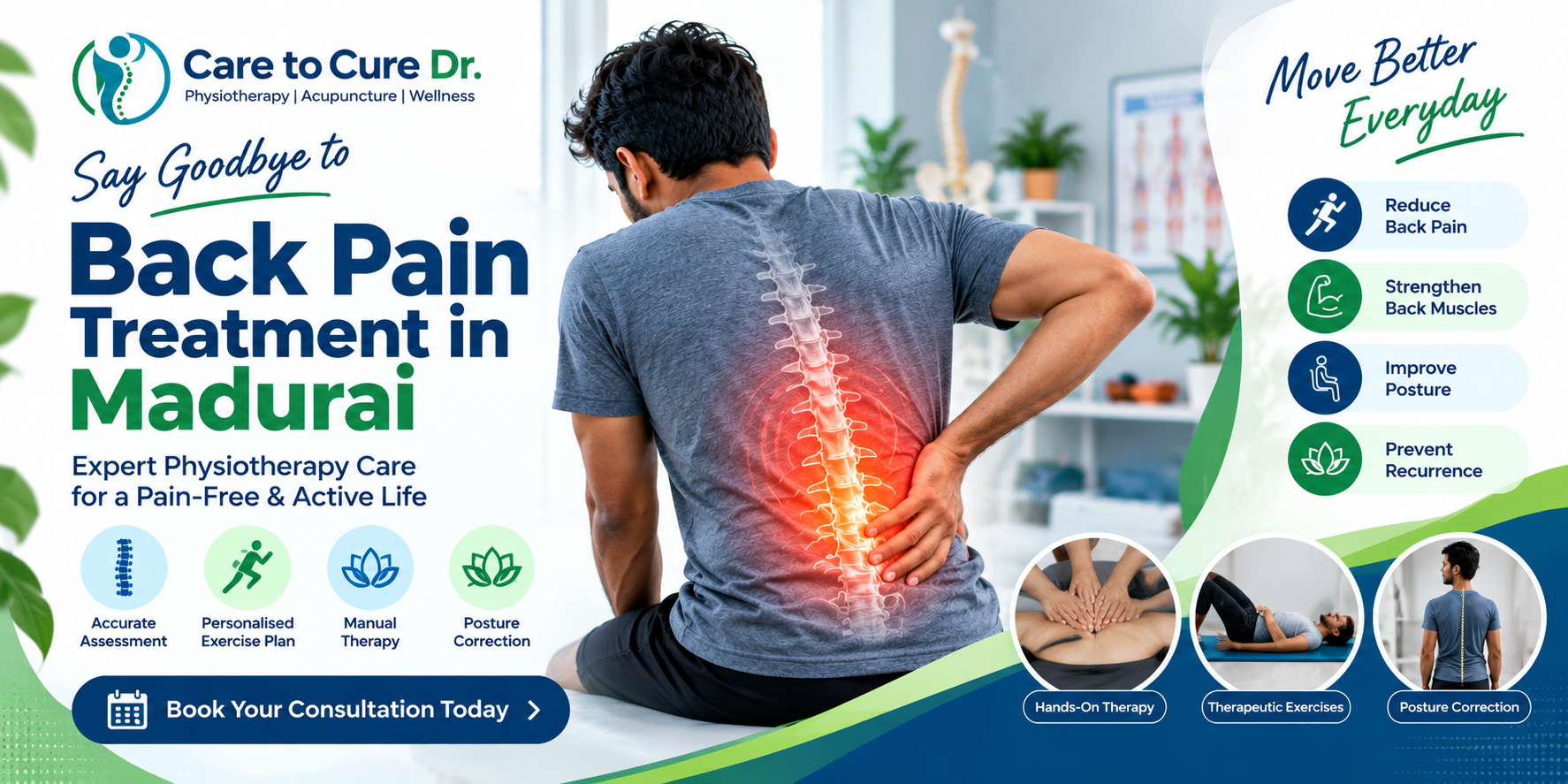
At Care to Cure Clinic, Madurai, personalised physiotherapy and rehabilitation services are available to support people experiencing back pain and other musculoskeletal concerns.
Instead of depending only on temporary relief methods, focus on understanding your condition, improving movement, strengthening supporting muscles, and developing healthy daily habits.
If you are searching for reliable back pain treatment in Madurai, take the first step towards better mobility and physical well-being.
Contact Care to Cure Clinic today to enquire about a physiotherapy consultation and discuss a treatment approach suited to your needs.
Website: https://caretocuredr.in/
Phone: 9894495112 / 8681024112
Address: H:763, Near Karumari Amman Temple, Opposite Manickam Mahal, Ellis Nagar, Madurai, Tamil Nadu – 625016.